

















































































Xiaomi Poco Pad X1 Price, Specifications, Pros & Cons
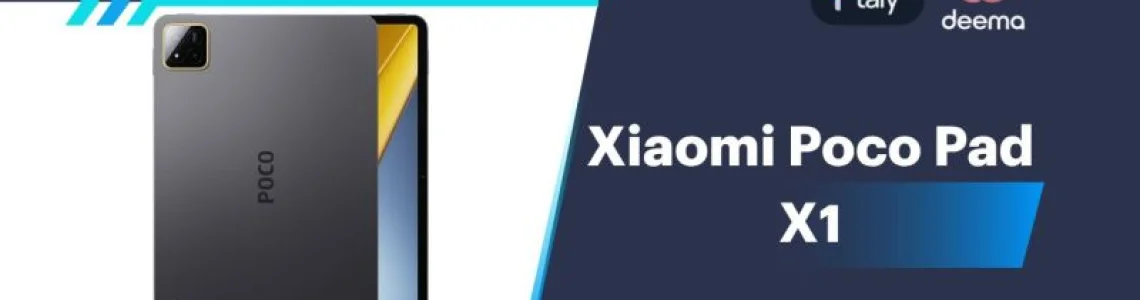
Xiaomi Poco Pad X1: A Tablet With a 3.2K Display and 144Hz Refresh Rate
The Xiaomi Poco Pad X1 holds the title of the first genuine tablet in Poco's newly expanded lineup, aimed at users looking for a high-resolution, high-brightness display with an ultra-fast refresh rate, strong performance for productivity and gaming, and a massive battery, at a lower price than traditional flagship tablets. So does the Xiaomi Poco Pad X1 deserve to be your pick among mid-to-high-tier tablets? Here's the complete breakdown.
Key Facts About the Xiaomi Poco Pad X1؟
The Xiaomi Poco Pad X1 was officially announced on November 26, 2025, alongside the Poco F8 phone lineup and the more affordable Poco Pad M1 tablet, as part of a global launch event, and went on sale that same day.
How does it relate to the Poco Pad M1?
The Xiaomi Poco Pad X1 is the higher-specced option between the two new Poco tablets, carrying a Snapdragon 7+ Gen 3 chipset and a 3.2K display with a 144Hz refresh rate, while the smaller Poco Pad M1 relies on a Snapdragon 7s Gen 4 chipset and a 2.5K display with a 120Hz refresh rate at a lower price.
What category does it belong to?
The Xiaomi Poco Pad X1 belongs to the mid-to-high tier tablet category, representing Poco's first serious attempt to enter the tablet market with competitive specs targeting productivity, entertainment, and gaming all at once.
Who is this device designed for?
The Xiaomi Poco Pad X1 is designed for entertainment and media enthusiasts thanks to its high-resolution, high-brightness display, for anyone wanting a partial laptop alternative through the Home Screen+ 2.0 feature, and for gaming enthusiasts who want a high refresh rate at a lower price than traditional flagship tablets.
What are the dimensions and weight of the Xiaomi Poco Pad X1?
The device measures 251.2 x 173.4 x 6.18 mm and weighs 500 grams, with a unibody metal construction that gives it a sense of durability and premium quality despite its extreme thinness.
What materials are used to build the Xiaomi Poco Pad X1?
The device features a glass front, with a back panel and side frame made entirely of aluminum, giving it high durability and a premium feel.
Does the device support a digital stylus?
Yes, the Xiaomi Poco Pad X1 supports the magnetic POCO Focus Pen, sold separately, which offers millisecond-level response latency with support for 8,192 pressure levels, and can be wirelessly charged by attaching it magnetically to the official POCO X1 Pad Cover, made of vegan leather.
Is an official keyboard available for the device?
Yes, an official Floating Keyboard is available with a dual hinge adjustable between 0° and 124°, adaptive backlighting, and a mechanical touchpad, sold separately from the tablet.
What type and size of screen does the Xiaomi Poco Pad X1 have?
The device features an 11.2-inch IPS LCD display with a 3:2 aspect ratio suited for productivity and reading, with a screen-to-body ratio of about 85.8%.
What is the display resolution and refresh rate?
The screen offers a very high resolution of 3200 x 2136 pixels (commercially referred to as 3.2K) with a density of about 345 pixels per inch, an adaptive refresh rate reaching up to 144Hz, support for over 68 billion colors, Dolby Vision and Adaptive HDR, and a peak brightness of 800 nits.
What eye-care features does the display offer?
The display carries TÜV Rheinland eye comfort certifications, with support for 4,096 levels of precise brightness adjustment, plus a Wet Touch feature that allows touch control even with moisture on the screen, and a super-resolution touch feature offering up to 10x the precision of standard touch.
What chipset powers the Xiaomi Poco Pad X1?
The device runs on the Qualcomm Snapdragon 7+ Gen 3 (SM7675-AB), built on a 4nm process, an octa-core chip combining one Cortex-X4 core at 2.8GHz, four Cortex-A720 cores at 2.6GHz, and three Cortex-A520 cores at 1.9GHz, paired with an Adreno 732 GPU and a dedicated Qualcomm AI engine.
What RAM and storage options are available?
The Xiaomi Poco Pad X1 comes with a fixed 8GB of LPDDR5X RAM, paired with a main 512GB storage option using UFS 4.0 technology (a lower 128GB variant uses the relatively slower UFS 3.1), with no external storage expansion slot, though it does support a virtual storage expansion feature via Xiaomi's proprietary UFS technology, adding up to an additional 16GB.
How does the device handle gaming and daily tasks?
The Snapdragon 7+ Gen 3 chipset delivers consistent performance reaching up to 120fps in high-end gaming, placing it roughly between the performance level of the Snapdragon 8 Gen 1+ and Snapdragon 8 Gen 2, making it very well-suited for heavy games and multitasking.
What operating system does it run and what AI features are available?
The device runs Android 15 with the HyperOS 2 interface, and receives up to 4 major Android OS upgrades, with support for the Home Screen+ 2.0 feature for running phone apps on the tablet, a Cross-Device Camera feature for using the phone's camera during calls, and integration with Google's Gemini assistant for chat, text and image generation, and meeting summarization.
What are the rear camera specifications?
The Xiaomi Poco Pad X1 features a single 13MP rear camera, supporting video recording up to 4K.
What are the front camera specifications?
The front camera comes in at 8MP, well-suited for video calls and work conferences, with support for smart conferencing features like automatic Fill Light, noise reduction, and FocusFrame speaker tracking.
What is the battery capacity of the Xiaomi Poco Pad X1?
The device packs a massive 8850mAh battery, providing up to 10.9 hours of continuous video playback — a very large capacity given the thin build and reasonable weight.
What fast charging speed does it support?
The Xiaomi Poco Pad X1 supports wired fast charging up to 45W, allowing the battery to charge from 0 to 40% in just 30 minutes, with a full charge taking about 103 minutes. The device itself does not support wireless charging, but it does support wireless charging for the POCO Focus Pen when attached to the magnetic cover.
Does the device support cellular SIM cards?
No, the Xiaomi Poco Pad X1 does not support any cellular connectivity (no 4G or 5G), operating on Wi-Fi only, with no independent SMS sending or receiving capability.
What wireless connectivity options are available?
The device supports dual-band Wi-Fi 6 and Wi-Fi 6E, and Bluetooth 5.4, with NFC Tap-to-Share support for quick device pairing, plus cross-device collaboration features like call sync, shared clipboard, and shared notifications between the phone and tablet.
What audio system does the device use?
The Xiaomi Poco Pad X1 features a quad-speaker system enhanced with Dolby Atmos, with a volume boost mode reaching up to 200% of normal volume for an immersive listening experience.
Top Pros of the Xiaomi Poco Pad X1
An ultra-sharp 3.2K display with a refresh rate reaching up to 144Hz.
A Snapdragon 7+ Gen 3 chipset delivering strong performance in gaming and productivity.
A massive 8850mAh battery with 45W fast charging.
An elegant, durable unibody metal build despite its thinness.
Support for the POCO Focus Pen with extremely low latency and 8,192 pressure levels.
A quad-speaker system with Dolby Atmos.
Integration with Google's Gemini assistant and multiple AI features.
Top Cons of the Xiaomi Poco Pad X1
No cellular connectivity (4G or 5G) support, limited to Wi-Fi only.
No microSD storage expansion slot.
No wireless charging support for the device itself, limited to charging the pen only.
The POCO Focus Pen and keyboard are sold separately at extra cost.
A single 13MP rear camera with no additional lenses.
Who should buy the Xiaomi Poco Pad X1?
The Xiaomi Poco Pad X1 is an ideal choice for entertainment and productivity enthusiasts who want a high-resolution, high-brightness display with a high refresh rate, along with strong gaming performance, without paying the full price of a flagship tablet. Those who need direct cellular connectivity or external storage expansion may prefer to look at other options.
FAQs
It has an 11.2-inch IPS LCD display with 3.2K resolution (3200 x 2136 pixels) and a refresh rate up to 144Hz.
Leave a Comment