





















































































What Is the Apple iPhone 16e and Why Is It the Smartest Choice in Kuwait and the Gulf in 2026?
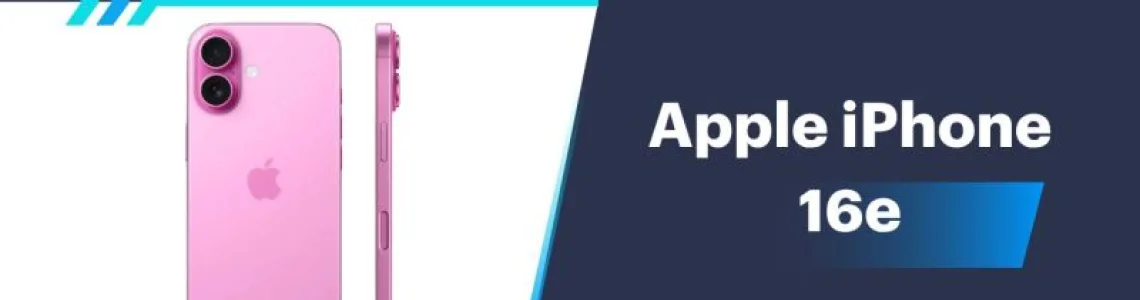
What Is the Apple iPhone 16e and Why Is It the Smartest Choice in Kuwait and the Gulf in 2026?
If you're looking for an Apple phone that delivers real performance at a more sensible price, the Apple iPhone 16e is the answer you've been waiting for in 2026. Apple launched it in February 2025 to fill the gap left by the iPhone SE lineup, but it arrived at a completely different level: the full power of the A18 chip, a genuine OLED display, and complete support for Apple Intelligence features. In this comprehensive article, we take you on a detailed tour of everything about the Apple iPhone 16e — from full technical specifications to camera, battery, and design, all the way to comparing it with competitors and determining who it suits and who it doesn't in Kuwait and the Gulf states in 2026.
What Is the Apple iPhone 16e and Who Is It Made For?
How Did the iPhone 16e Replace the iPhone SE Lineup?
Apple officially ended the iPhone SE series with the launch of the Apple iPhone 16e, introducing an entirely new generation in terms of design, performance, and specifications. Unlike SE devices that relied on older chassis and processors from two generations back, the new budget iPhone arrived with the modern A18 chip, Face ID, and an OLED display — specs that were exclusive to higher-end models until recently. This shift redefines what "budget" means within Apple's ecosystem.
What Makes the iPhone 16e Apple's "Budget" Phone in 2026?
The label "budget" here is a compliment, not a criticism. The Apple iPhone 16e achieves the perfect balance between cost and performance through calculated trade-offs: a single rear camera instead of two, a 60Hz display instead of ProMotion, and the absence of MagSafe and a UWB chip — all in exchange for a price that's hundreds of dollars less than the standard iPhone 16. The result is a phone that gives you 80% of the flagship experience at 60% of the cost, a smart equation that's hard to ignore.
Is the iPhone 16e Still Worth Buying in 2026?
The direct answer is yes — for the right buyer. The iPhone 16e runs iOS 19 in mid-2026 and supports all Apple Intelligence features available on the A18 chip. If you're coming from an Android phone or an iPhone older than the iPhone 12, the Apple iPhone 16e will feel like a massive generational leap in nearly every area — performance, camera, battery, and the full Apple ecosystem.
How Does the iPhone 16e Fit Into Apple's 2026 Lineup?
In Apple's 2026 lineup, the iPhone 16e occupies the entry point — below the iPhone 16, iPhone 16 Plus, iPhone 16 Pro, and the newer iPhone 17 series. It's the phone that gets you into Apple's modern ecosystem at the lowest possible cost without any compromise on the chip or the operating system.
Who Should Avoid the iPhone 16e in 2026?
The Apple iPhone 16e doesn't suit every user. Anyone who needs a ProMotion 120Hz display, a triple-lens camera system, MagSafe accessories, or professional ProRes video recording will find themselves needing to look at the iPhone 16 or above. Gamers who value high display smoothness will also notice a clear difference.
Full Technical Specifications
Processor and Performance
The standout specification in the Apple iPhone 16e is the Apple A18 chip — the same processor used in the standard iPhone 16, built on 3-nanometer technology. It features six processing cores (two high-performance + four efficiency cores), five graphics cores, and a 16-core Neural Engine that allows Apple Intelligence tasks to be processed locally on the device without needing the cloud. In performance benchmarks, the iPhone 16e outperforms all Android processors in the same price range and even rivals flagship Android devices released in late 2024.
Memory and Storage
The iPhone 16e comes with 8GB of RAM — making it the first "budget" Apple phone to carry this amount. This memory is essential for running Apple Intelligence locally on the device. Storage comes in two options: 128GB and 256GB, both using fast NVMe technology. There is no external memory card slot, so choose your capacity carefully.
Display
The iPhone 16e features a 6.1-inch Super Retina XDR OLED display with a resolution of 2532 × 1170 pixels and a pixel density of 460 PPI. Brightness reaches 800 nits in typical use, 1,200 nits for HDR content, and 2,000 nits in direct outdoor sunlight — numbers that ensure screen clarity under Kuwait's intense sun, a practical consideration that's often missing from spec sheets.
The display runs at a fixed 60Hz refresh rate, which is the most discussed limitation of the iPhone 16e in 2026. While the OLED panel itself is excellent in color accuracy and contrast, the absence of ProMotion (120Hz) makes scrolling and animations feel less smooth compared to the iPhone 16 or iPhone 16 Pro. For everyday use like messaging and browsing, 60Hz is perfectly adequate, but the difference is noticeable in games and navigating between apps.
The Apple C1 Modem
One of the most interesting features of the Apple iPhone 16e is the Apple C1 modem — the first cellular modem Apple has built entirely in-house. The C1 was designed specifically for power efficiency rather than maximum data speed, meaning better battery life on 4G and 5G networks. In Kuwait and the Gulf states, where signal strength varies between urban and residential areas, this translates directly into longer usage on a single charge.
The iPhone 16e supports 5G on Sub-6GHz frequencies deployed by all major carriers in Kuwait, Saudi Arabia, the UAE, and Qatar, including Ooredoo, Zain, STC, and Viva. It doesn't support mmWave, but that band isn't commercially widespread in the region, so its absence has no practical impact. The device also supports eSIM alongside a traditional SIM card, offering flexibility for travelers and dual-line users.
Camera Performance
The Single 48-Megapixel Rear Camera
The iPhone 16e's rear camera is a single 48-megapixel sensor with an f/1.6 aperture, optical image stabilization (OIS), and 100% focus pixel coverage. Apple's computational photography system — including Photonic Engine processing — means every photo benefits from full resolution and intelligent AI enhancement, giving the iPhone 16e's imaging technology results that far exceed what's expected from a single camera at this price point.
2× Zoom Without Quality Loss
This is one of the smartest engineering decisions in the Apple iPhone 16e. Since the sensor captures 48 megapixels natively, Apple can crop the center of the image to produce a full 12-megapixel photo at a 2× equivalent magnification with no quality loss. This effectively gives users a free telephoto option without an additional lens. Beyond 2×, digital zoom degrades noticeably.
Front Camera
The 12-megapixel TrueDepth front camera supports Face ID, Portrait mode, Cinematic mode, and 4K video recording at 60fps. Center Stage — which automatically follows you during video calls — makes it an excellent option for remote work and family calls, both extremely common use cases in Kuwait and the Gulf.
Camera Limitations
The most obvious camera limitation is the absence of an ultrawide lens and a dedicated telephoto lens. There's no wide angle for architectural photography, no periscope zoom, and no macro mode. Video tops out at 4K/60fps without ProRes or Log (reserved for Pro models). Night mode is present but less advanced than on the iPhone 16 Pro. For everyday photography and social media content, these limitations rarely pose a real obstacle.
Battery and Charging
The iPhone 16e's battery is one of the device's strongest points, thanks to the power-efficient C1 modem and A18 chip with its efficiency cores. Apple estimates 26 hours of video playback — the highest estimate Apple has given for a "base" phone at launch. In mixed real-world use (browsing, social media, calls, light gaming), most users report comfortably getting through a full day or a day and a half on a single charge, even in Kuwait's high temperatures.
The device charges via USB-C and supports fast charging up to 25 watts (with a 30W or higher adapter sold separately), reaching approximately 50% from zero in 30 minutes with a compatible charger. It also supports Qi wireless charging at 7.5 watts.
The Apple iPhone 16e does not support MagSafe, meaning magnetic charging accessories, wallets, and mounts are not compatible. For anyone who hasn't yet built a MagSafe ecosystem, this absence is not a major concern.
Design and Build Quality
The iPhone 16e uses the modern flat-edge design made from aerospace-grade aluminum, with a matte glass back and Ceramic Shield on the front. At 138.3 × 67.3 × 7.8 mm and weighing 167 grams, it is compact and comfortable to use one-handed — a rare quality in a market dominated by larger screens.
It carries an IP68 rating (6 meters depth for 30 minutes) — the same standard as the regular iPhone 16. In practice, splashes, rain, and brief submersion won't damage the device, which reassures users in Kuwait whether near swimming pools or during occasional seasonal rain.
The device comes in three colors: Black, White, and Ultramarine (a bold dark blue). It is available in a single 6.1-inch size only — there is no Plus or Max version.
The iPhone 16e uses Dynamic Island — the dual-cutout shape that houses Face ID and the front camera while displaying interactive activity alerts. While some 2026 commentary describes it as relatively dated, it remains functionally far superior to a traditional notch.
Software and Apple Intelligence
The Apple iPhone 16e launched with iOS 18 and by mid-2026 runs iOS 19 — Apple's latest release — with full access to all features and no model-specific software restrictions.
Apple Intelligence runs locally on the device thanks to the 8GB RAM and 16-core Neural Engine, and includes writing tools (rewriting, proofreading, and summarizing text across all apps), Image Playground for AI image generation, priority notifications with intelligent filtering and automatic summarization, an enhanced Siri with deeper contextual understanding and screen reading capability, and Visual Intelligence for instant analysis of objects and text through the camera. With iOS 19, Arabic language support in Apple Intelligence has expanded significantly, making the iPhone 16e experience considerably more valuable for Arabic-speaking users in Kuwait and the Gulf.
Key Strengths
The combination of the A18 chip and C1 modem makes the Apple iPhone 16e one of the most power-efficient iPhones in its price category ever made. The C1 modem dynamically adjusts its power consumption based on signal strength — a genuinely valuable feature in Kuwait where you might move between strong 5G coverage in the city center and weaker LTE in residential neighborhoods.
In daily use, the iPhone 16e stands out for its reliability through tight hardware-software integration in iOS, its longevity with 5-6 years of guaranteed iOS updates (meaning a device purchased in 2025 will remain updated until at least 2030), its security through Face ID, encrypted iMessage, and rapid security updates, seamless ecosystem integration with Mac, iPad, Apple Watch, and AirPods, and consistent camera output where even with a single lens, Photonic Engine delivers reliable, beautiful photos in most conditions.
Weaknesses and Limitations
In 2026, even mid-range Android phones at half the price of the Apple iPhone 16e offer 90Hz or 120Hz displays. The 60Hz screen is the most obvious trade-off Apple made, and users notice it immediately when coming from a ProMotion device or a high-refresh Android. Scrolling is less smooth, animations are less fluid, and games are less responsive. The device performs well, but this compromise is painful given the price.
Beyond the display, the iPhone 16e lacks MagSafe (Qi wireless charging only at 7.5W), UWB (affecting precision in Find My and spatial audio), an Action Button (using a traditional mute switch instead), an ultrawide camera, a true telephoto lens (2× via cropping only), ProRes or Log video recording, and an Always-On display.
For most users, UWB is useful but rarely decisive. MagSafe is a bigger loss for those who have built their accessories ecosystem around it — car mounts, wallets, and faster wireless charging. But if you're coming from an iPhone 14 or older, you've never experienced these features and won't miss them.
Who Is It Right For?
The Apple iPhone 16e is the ideal choice for people switching from Android who want the genuine iOS experience without paying flagship prices, students who need a reliable long-supported device with excellent Apple ecosystem integration, business users who prioritize security and longevity over camera specs, budget-conscious buyers in Kuwait and the Gulf looking for Apple quality at a more reasonable price, and parents buying for their children — durable, supported for years, and with excellent parental control options in iOS.
FAQs
Yes. It runs iOS 19, supports all Apple Intelligence features, and carries the same A18 chip found in the iPhone 16 from 2024. Unless you specifically need a multi-lens camera system or MagSafe, it offers exceptional
Leave a Comment